Good Girl Gone Rogue!
In the previous volumes of #M4TMDD, I spoke briefly about the flapper’s rebellion and the polished grace of the 50s — But there is a specific ghost that haunts the vanity of every woman who reaches for a tube of rouge red: “The Jezebel.”
Historically, red lipstick wasn’t just a "color choice"—it was a socio-political statement. In the early 20th century, and even stretching back to colonial "morality" laws, a bold red lip was often used to label a woman as "the other." It was the mark of the "Jezebel"—a term weaponized to suggest a woman was too loud, too visible, or too dangerous to be "respectable." As previously stated, you are taking a color that was once used to control or judge women and transmuting it into a tool of "Aesthetic Autonomy," announcing your presence on your own terms rather than seeking "respectability."
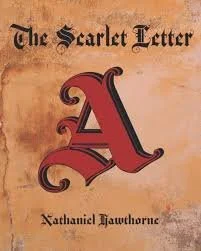
The "scarlet letter" became a symbol of hatred because it was used as a public instrument of social branding and forced shame. In Nathaniel Hawthorne’s novel, the red letter "A" was pinned to the protagonist's chest to permanently identify her as a "sinner".
To reclaim your power, you are essentially engaging in a "Rogue" transformation, subverting the traditional French Rougeinto a symbol of defiance. This isn't just about makeup; it's about taking a pigment historically used to mark and shame women—branding them with the "Jezebel" archetype for simply daring to be seen—and reclaiming it as a personal declaration of "Aesthetic Autonomy." By choosing this bold frequency, you perform a type of artistic alchemy, converting a label meant for control into a weapon of visibility that refuses to ask for permission.
Deconstructing the Jezebel Myth
For centuries, the red lip has been more than a pigment; it has been a "moral compass." To understand why we Alchemize today, we have to look at the shadow history of the red lip—a history steeped in religious affiliation and the "Jezebel" archetype.
The Burden of the "Scarlet Letter"
In many traditional and religious contexts, the color red on a woman’s face was synonymous with vanity, deception, and—most damagingly—promiscuity. The biblical figure of Jezebel was famously described as "painting her eyes" before her downfall, a detail that religious institutions used for generations to link cosmetics to "moral decay."
For the "Modern Day Doll," this ancient connotation often lingers as a subconscious whisper: s this too loud? * Will I be misunderstood? * Am I "asking for attention"?
The Truth: Pigment is Not a Personality
Let’s be clear: Lipstick does not make you promiscuous.
A bold lip is not an invitation; it is an announcement of presence.
The negative connotation was never actually about the makeup—it was about Control. By labeling red lipstick as "sinful" or "dangerous," society attempted to dim the visibility of women who were comfortable being seen. They feared the woman who looked in the mirror and liked what she saw.
We are taking that old, dusty "Jezebel" label—meant to shame us into being quiet and "modest"—and we are burning it down.
In 2026, we wear the Rogue Red to honor:
Visibility over Vanishing: Choosing to be seen on our own terms.
Art over Affiliation: Treating our faces as a canvas for our internal mood, not a reflection of someone else's moral code.
Autonomy: Understanding that the only person who gets to define what your look "means" is you.
The Doll’s Final Word: You can be a woman of deep faith, deep intellect, and deep kindness—all while wearing a lip color that screams. The red on your lips is an art form; the light in your spirit is the truth. Never mistake the two.
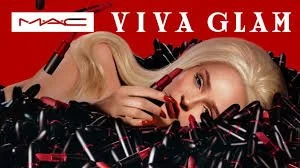
VIVA GLAM Campaign by MAC COSMETICS is one of my absolute favorite lines to shop from when it comes to a good signature combo.